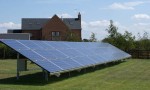


STA members to open up their solar farms on 4th July for Solar Independence Day
Schools and communities invited to see how solar farms are improving our environment and our economy.

Several members of the Solar Trade Association will open up their solar farms to visitors from local homes, schools, businesses and community groups across England and Wales on 4th July as part of a nationwide event called Solar Independence Day. The event seeks to give visitors the opportunity to ask any questions they have about solar energy to the people building the projects. It also seeks to demonstrate how responsibly developed solar farms are improving the local environment and how solar energy is making the UK more independent from the rising costs of polluting fossil fuels imported from overseas. The event forms part of an educational push by the STA to communicate the tremendous benefits of all applications of solar, and the need for better and more stable policy support.
The event is part of a wider commitment in the solar industry to building enduring relationships with communities hosting solar farms, from initial project development and construction through the lifetime of the project to its eventual decommissioning. The principle of ‘solar stewardship’ is key to the STA’s ‘10 Commitments’ guidance for the responsible development of solar farms. The STA followed the 10 Commitments earlier this year with guidance on how solar farms can also become biodiversity hotspots, jointly produced with the BRE National Solar Centre and supported by several leading UK conservation charities, including the RSPB and National Trust. The STA is also working with Government to facilitate shared ownership of renewable energy projects between commercial developers and local communities.
STA Chief Executive Paul Barwell said:
“There’s a really positive story to be told about how benign, unobtrusive solar farms are quietly reducing our carbon emissions, boosting local biodiversity, helping farmers diversify their income, creating jobs and enhancing the UK’s energy security. We need to tell this story to counter the bad news stories resulting from a tiny minority of poor quality projects seized on gleefully by some newspapers and politicians.
“With 85% support, solar consistently enjoys the highest public opinion rating of any energy technology. We’re working hard to maintain that level of support. This means commitment to good quality while continuing to invest to bring down costs for everyone. Despite current uncertainty in central Government policy, we remain committed to leading the renewable energy sector to price parity with fossil electricity as soon as possible.”
The 4th July famously marks the birth of the independent United States of America. Barclays recently downgraded the whole electricity high-grade bond market in the USA, stating: “We believe that solar + storage could reconfigure the organisation and regulation of the electric power business over the coming decade” . The solar industry has chosen this day for the event because increased independence is a key benefit of solar energy in the UK.
- Increased independence from imports of polluting fossil fuels
Solar power, like most renewable energy, is home-grown. Sunlight is free, is not owned by anyone and will not run out for millions of years. Every unit of solar energy offsets the need to pay for fossil fuels from places like Russia or Qatar. Solar power is rapidly getting cheaper while fossil fuels are expected to get more expensive as the twenty-first century wears on. 15% of UK electricity currently comes from renewables [7]. The higher this number gets, the more secure our electricity supply becomes, and the lower the risk of triggering dangerous climate change.
- Increased independence for UK agriculture and produce
Harvesting the sunshine provides an additional and secure income stream for UK farming businesses, reducing exposure to financial risk resulting from poor crop yields, which will become increasingly common due to climate change. Solar farms can also accommodate sheep grazing under and between the panels and equipment. The posts panels are raised on typically take up less than 1% of the land area with 25-40% of the surface over-sailed by panels. By making UK farming businesses more independent, secure and sustainable, solar helps safeguard these businesses’ ability to increase their production of home-grown food, boosting the UK’s food security.
- Increased independence for consumers from high energy bills
By putting solar panels on your roof, or working with your community to develop a larger solar project, you can take back ownership of your energy supply from the monopoly of the ‘Big Six’ energy companies.
We invite everyone with an interest in solar to come along to these free open day events, from members of the media to local residents, schools, businesses and community groups. Full details of the events and registration details are included in the Notes to Editors below.
The STA seeks to expand the use of solar power and heating at all scales – not just large scale solar farms – and is today hosting an industry event on unlocking barriers to solar power projects on medium and large scale rooftops, such as offices and factories.