




We must all work together for food & conservation, farmers told at Agricultural Society Conference

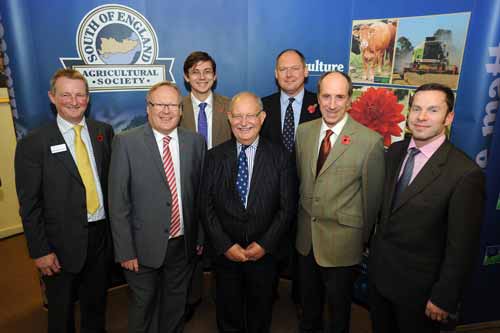
Nearly 200 farmers and land owners gathered at the South of England Agricultural Society last week to hear an impassioned debate on how farming and conservation can work together for the good of all who care about farming and the great British countryside.
The SEAS Autumn Farming Conference was a good-hearted affair despite the potential for controversy in its title: “Is Conservation compatible with Intensive Farming?” Martin Harper, Conservation Director of the RSPB, pointed out that although the British countryside had historically been shaped by farming, the number of farmland birds had halved over the past 40 years, with butterfly populations showing similar declines and the costs of clearing up from agro-fertilizers were in hundreds of billions of Euros.
However, the RSPB was also promoting solutions for pest management, reductions in fertilizer use, water management, encouragement of wildlife habitats and working with farmers. The charity itself was attempting on its own two farms to improve habitats for farmland birds while also addressing the economic challenges of farming.
Martin said the challenges for the future were to further develop best farming practice for the protection of birds and wildlife; support further research and development to make more conservation possible alongside the increasing demand for food production; and further improvements to agro-management.
Next, the Conference heard from Andrew Mason, Managing Director of Sentry Farming, who said everyone at Sentry cared passionately about the countryside and wildlife, and 90 per cent of the company’s 55,000 acres of farmland was in one or more environmental schemes. He said Sentry farms had 925 miles of hedgerows, 650 miles of ditch management, 25,000 trees and 85 miles of hedges that had been planted; and 410 acres of field corners for the benefit of birds and plants.
However, Andrew predicted a future of financial volatility with no guarantee of future profitability in the industry, which would cause great problems for people deciding whether or not they could afford to invest in the countryside and conservation. But he concluded: “My personal belief is that farming is compatible with conservation. Farmers’ own belief is that looking after their farms is the most prevailing fact, even more prevailing than the red tape.”
The Conference was sponsored by Complete Land Management, Mayo Wynne Baxter, Lloyds TSB Agriculture and Chavereys. Brian Williams, Chairman of the South of England Agricultural Society, thanked the sponsors without whom the evening would not have been possible.