




Barenbrug welcomes agricultural merchants to exclusive Cropvale Open Day

Specialist agricultural grass seed breeder Barenbrug recently welcomed its merchants to its Cropvale UK research centre for a special open day.
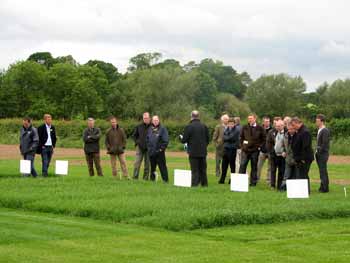
Over 40 merchants descended upon the 700-plot site in Worcestershire, wanting to see the latest trials of Barenbrug-bred grass species and mixtures. The day showcased the latest new species as well as experimental product, including an innovative mixture featuring an establishment- and yield-enhancer based on fertiliser technology.
Commenting on the findings he shared with merchants, David Long says: We were delighted to reveal the results from the first cuts taken this year. The 2010 sowings of mixtures and development trials were cut on 28 April, with the average yield of the two trials equivalent to 20 tonnes per hectare of fresh material. There was significant variation between species; High D, our BARforage Italian ryegrass mixture yielded 153 percent of the trial average over 30 tonnes of fresh material per hectare.
This achievement reflects the ability of Italian ryegrass to grow at lower soil temperatures and so start spring growth earlier. This is an important consideration where summer growth can be limited by drought. There are also encouraging results from a new mixture we are developing to meet the need for high-quality extended grazing of dairy cows. This produced 11 percent more grass in this important grazing period than a conventional cow grazing mixture.
Weve also cut the Italian and Hybrid ryegrass trials sown in September 2009. The average yield from the first cut equates to 9.5 tonnes of fresh material per hectare, with the second cut giving 20.5 tonnes. It is interesting that the best yields in this trial comes from potential varieties from Barenbrugs breeding station near Toulouse, which suggests that they are better equipped to stand drought, given their origins.
After a fascinating afternoon inspecting the trials and talking to their hosts about results such as David describes, the delegates enjoyed a barbeque and some cold beers in the Worcestershire sunshine. Summarising the day, Paul Johnson says: The event was a great success and the response weve received has been overwhelmingly positive. Our guests were very impressed with the scale of the site and the investment weve made, and Im pleased weve been able to give them a sneak preview of some of the breakthroughs weve made that are set to benefit UK agriculture into the future.
For further information visit www.barenbrug.co.uk or call the office on 01359 272000 or email info@baruk.co.uk