




Rural pets benefit from new campaign to keep animal disease at bay
Owners of working dogs are being offered the chance to help keep both their working animals and family pets alike healthy with a special discount offer on vaccination to ease strains on household bills during the economic downturn.
Vets are backing the National Vaccination Month campaign (www.nvmonline.co.uk) which runs during May and practices across the country will be offering a discount on vaccination for eligible cats, dogs, rabbits and horses to encourage pet owners not to cut back on life-saving healthcare.
Research suggests that 47% of vet practices have confirmed or suspected cases of the killer disease parvovirus in the last 9 months and that the disease is on the increase within hotspots in certain parts of the UK (1). If reports are representative there may be around 6,000 cases or more of this killer disease being seen by vets in the UK currently.
Meanwhile dogs in regular contact with water are at risk of Leptospirosis, a fatal disease transmitted through rats urine, which can also be passed onto humans and is thought to be on the increase due to the rise in the rat population.
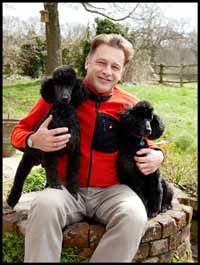
Chris Packham, who presents the BBCs Spring Watch and Autumn Watch series and is the owner of two poodles, Itchy and Scratchy, said: Vaccination is a simple way to protect both your own pets and the wider pet population from serious and potentially fatal infectious diseases.
Signs that people have cut back and are not vaccinating their animals, while at the same time killer diseases such as parvovirus may be on the increase are really concerning.
As a pet owner and animal lover myself, I am hoping that this campaign could be the incentive pet owners need to get their animals back on track with vaccination and help them stay healthy.
Animal disease is something that rarely hits the headlines but this year we are marking 10 years since the Foot and Mouth outbreak decimated Britains farm animal population. That was a very visible example of a terrible disease outbreak. Without wishing to scare people, pet disease is also lurking out there it is the kind of thing that you never think is going to happen to your beloved pet but when it does, it is devastating.
TV Zoo Vet Matt Brash who is also backing National Vaccination Month said: Research shows that the main reason why people dont vaccinate their pets is a lack of awareness of disease risk. We are also concerned that given the current pressures on household budgets, more people are deciding to cut back on vaccinating their animals with the real risk that this may have a potential effect on levels of herd immunity in the longer term.
Jane Carter of the Drove Veterinary Hospital in Swindon welcomed the campaign.
She said: There was a significant outbreak of parvovirus in Swindon last year. It attracted a lot of publicity because 20 dogs died from one area which was tragic so we are really expecting pet owners here to catch onto the campaign.
By logging onto www.nvmonline.co.uk eligible pet owners can download a voucher for a discounted vaccination offering savings of around 30 from participating surgeries throughout May.
Dogs and cats over 18 months of age and that havent been vaccinated for at least 18 months are eligible for National Vaccination Month. Rabbits that havent been vaccinated for 9 months and are at least 9 months old are also eligible. Horses will need to be over 12 months of age and be unvaccinated or have lapsed from their normal booster vaccination by more than three months.
During the last National Vaccination Month in June 2009, an additional 40,000 animals were vaccinated as a result.
The 2009 campaign came after more than a quarter of vets surveyed (2) reported concerns about falling levels of vaccination because of the credit crunch.
Research also suggests owners in some parts of the country are finding it harder to pay for the cost of vaccination raising fears of disease “hot spots”.
A recent survey on behalf of Intervet/Schering-Plough Animal Health (3) of more than 1000 cat owners showed almost two thirds of respondents take their cats to the vets one or more times a year and yet, nationally, less than a quarter of cats have up to date protection against cat flu and enteritis (4).
A nationwide survey of vets through CICADA (Computer-based investigation into Companion Animal Disease Awareness) research collected by animal health company, Intervet/Schering-Plough Animal Health shows that based on reports received in the nine months February 2011 to just under 47.4% of vet practices had confirmed or suspected cases of the killer disease parvovirus during that period. Reported cases of cat flu were also up a third compared to the previous 9 month period. If the reports are representative it suggests around 6,000 cases of parvovirus and some 33,000 cases of cat flu are seen by vets across the UK per year. Other significant risks include that posed to dogs with Leptospirosis by the large rat population. Myxomatosis also continues to represent a major threat to domestic rabbits being a fatal disease most commonly seen in late summer and autumn and usually spread by biting fleas and other insects.
About Intervet/Schering-Plough Animal Health
Intervet/Schering-Plough Animal Health, based in Boxmeer, the Netherlands, is focused on the research, development, manufacturing and marketing of animal health products. The company offers customers one of the broadest, most innovative animal health portfolios, spanning products to support performance and to prevent, treat and control disease in all major farm and companion animal species. Intervet/Schering-Plough Animal Health; subsidiaries of Merck & Co. Inc., Whitehouse Station NJ, USA. For more information, visit www.intervet.com.About Merck
Today’s Merck is working to help the world be well. Through our medicines, vaccines, biologic therapies, and consumer and animal products, we work with customers and operate in more than 140 countries to deliver innovative health solutions. We also demonstrate our commitment to increasing access to health care through far-reaching programs that donate and deliver our products to the people who need them. Merck. Be Well. For more information, visit www.merck.comReferences:
1. CICADA data
2. Blue Donkey poll of 100 vets, October 2008
3. Survey of cat owners on behalf of Intervet/Schering-Plough Animal Health, June 2010.
4. Market Data May 2010, dmrkynetec.