




Gleadell Malting Barley report
In the UK, the winter barley harvest is well under way and, so far, the indication is for much higher Nitrogen than normal with reduced yields.
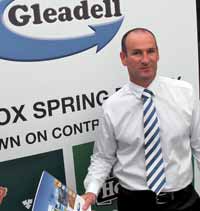
The drought has really pushed Nitrogen levels up this year and even the later winter barleys on the more drought resistant soils are trending higher, explains Stuart Shand, Gleadell Agricultures sales director. It is not uncommon for growers who normally get 1.60 Nitrogen to have a shed full of 2.00% or over.
Maltsters are still trying to persuade their customers – the Brewers – to relax their nitrogen tolerances even further. But Brewers want to see more spring results before they make any decisions.
We are still expecting the south of England to produce very good spring barley as they have always had the better of the growing season weather, and the first results seem to confirm this. We are now seeing Lincolnshire spring barley results and, again, the trend is for higher Nitrogen and lower yield than normal.
Mr Shand comments that Null-Lox varieties are doing extremely well in comparison to conventional varieties. On one farm where the grower had both Null-Lox and conventional barley, the Null-Lox yielded 2.33 t/acre (5.75 t/ha) and the conventional 1.86 t/acre (4.60t/ha) at very similar moistures of 16.60 vs. 16.20%. The Null-Lox Nitrogen was 1.80 vs. 1.78 for the conventional, with the other quality parameters as good. (Null Lox is traded on 1.92 Nitrogen).
This means the Null-Lox variety Cha Cha gave 43/tonne extra income over the conventional variety. It’s therefore no surprise to learn that they have now decided to swap all of their spring malting barley tonnage over to Null-Lox for the 2012 season, he adds.
1. Null-Lox spring malting barley is a new development from the Carlsberg Research Centre, moving malt and beer quality onto the next level. Null Lox has been successfully grown and trialled in Denmark, Sweden, Finland, France, Poland, Russia and the Ukraine – and is now being grown in the UK on exclusive buyback contracts with Gleadell Agriculture.
2. Null-lox has been developed by Carlsberg Group Research, and lacks the Lox enzyme, normally present in barley, which accelerates the staling process making off-flavours. Carlsberg researchers have shown that, without the Lox enzyme, the beers taste better for longer and foam is improved. The research has shown that you get a more uniform quality beer by minimising negative beer staling components: no aged off-flavours and stable, quality foam, when beer is brewed using Null-Lox barley.
3. Gleadell Agriculture currently has offices in Full Sutton (Yorkshire), Hemswell (Lincolnshire), Swaffham (Norfolk), Lyndon (Rutland), Warminster (Wiltshire) and Bilsborrow (Lancashire).
4. Gleadell Agriculture Ltd is equally owned by Toepfer International – based in Hamburg, who trade in all agricultural products globally; and InVivo – based in Paris, who trade agricultural products on the international markets and operate major grain storage and handling facilities.