




Antimicrobial resistance and anthelmintic resistance
Keeping the newer anthelmintics on the shelf until there is widespread resistance to each of the older groups would be a disastrous policy for a number of reasons.
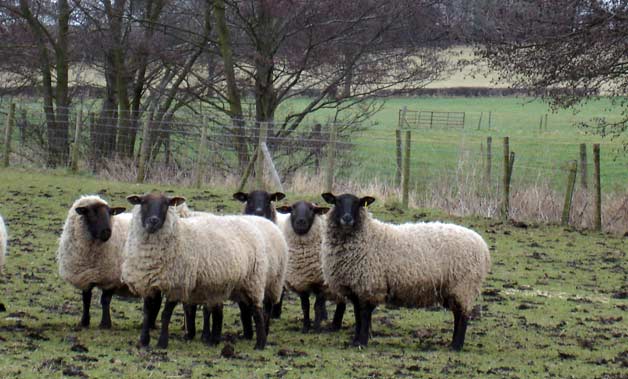
The management of anthelmintic resistance within a flock requires a holistic approach
Antimicrobial resistance receives considerable media attention in medical, veterinary and wider literature so conscientious practitioners are left in no doubt as to best practice. The key points are summarized in the BVA 8-point plan1, the first of which urges practitioners to work with clients to avoid the need for antimicrobials, primarily through integrated disease control programs and health planning. Further points promote responsible use: the avoidance of inappropriate use and the minimisation of prophylaxis so that ‘as little as possible and as much as necessary’ is used. Alongside encouragement to monitor sensitivity, we are urged to use narrow-spectrum products and ‘the right drug for the right bug’.
Efficient lamb performance and productivity is detrimentally affected by nematodes that are increasingly resistant to many of the commonly used anthelmintics. Much of the advice pertinent to antimicrobial resistance is comparable to that given by the cross industry group, SCOPS (Sustainable Control Of Parasites in Sheep) with respect to anthelmintic resistance. Sheep farmers are encouraged to work with their vet in developing a control strategy and responsible use is promoted so that anthelmintics are administered effectively, only when necessary and with the most appropriate narrow spectrum product for the task.
The broad-spectrum nature of many antimicrobials contributes to the development of resistance as non-target organisms, such as commensual gut bacteria, are affected. The possibility of resistance transmission via plasmids means that the consequences of antimicrobial misuse, particularly in E.coli, salmonellae and campylobacters have significant human public health as well as veterinary implications. There has not been a new antibiotic class discovered for over twenty five years and there are suggestions that there is little incentive for pharmaceutical companies to do so2. However, it is clear that, should a novel antimicrobial product be developed, it would be carefully guarded and presumably kept in reserve for human use and the treatment of infections that are resistant to treatment with other products.
In stark contrast, there have been two novel anthelmintics (monepantel and the dual-active containing derquantel and abamectin) made available to the sheep industry within the last five years. Should these products also be carefully guarded and kept in reserve or is this where there is a divergence between suitable strategies to counter the development of antimicrobial and anthelmintic resistance? Keeping the newer anthelmintics on the shelf until there is widespread resistance to each of the older groups would be a disastrous policy for a number of reasons, not least that once multiple groups of anthelmintics are no longer effective, the selection pressure for the development of resistance within the remaining drugs increases dramatically.
There is strong evidence to suggest that the strategic use of a new anthelmintic has the potential to greatly extend the life of existing anthelmintics if these are still effective3 and consequently the policy of using one of the newer classes as a mid to late season ‘break’ dose is encouraged by enlightened vets on some sheep farms. Why is it that more vets are not encouraging this practice on more sheep farms? The newer actives are expensive but simple maths can show that it is better to use an expensive product once a year to prolong the life of the cheap products than to lose the cheap products altogether and be left only with expensive alternatives.
The clock is ticking, with information collected from 62 sheep farms in south-west England suggesting that between 38% and 47% of farms showed evidence of resistance to all three of the older anthelmintic groups4. With widespread movement of sheep between farms in the UK, statistics such as this cannot provide a more compelling argument for effective quarantine treatments. Best practice suggests that a quarantine dose should consist of both moxidectin 1% and either monepantel or the derquantel/abamectin dual-active. The in-coming sheep should be yarded for 48 hours and then turned onto pasture that is well contaminated with the normal home population of nematodes5.
The management of anthelmintic resistance within a flock requires a holistic approach with the simultaneous appreciation of key, though sometimes conflicting, priorities. Veterinarians are uniquely placed to assimilate these flock priorities and guide their clients through their ideal flock health plan: the importance of refugia, lamb performance and acceptable growth rates and the availability of grazing which may be more or less-contaminated (for details see Sargison 20116 or Abbott 20135).
Faecal egg counting is a useful tool but it is much more than simply a diagnostic aid to answer the ‘should I or shouldn’t I drench this group?’ question. Regular monitoring and recording within a flock contributes valuable information which ultimately should allow mapping of pasture contamination. This year sees the UK launch of a remote faecal egg counting service which uses digital photography and a glass prism device to concentrate nematode eggs into a meniscus. This system will be available either directly on farm or via a third party such as a veterinary practice, though in either case, with suitable permissions, the farm vet will have access to the farm database of results.
Decisions as to how antimicrobials are used are generally in the hands of relatively small numbers of medical and veterinary professionals making individual clinical judgments. In comparison, anthelmintics are far more widely available and decisions as to their use are in the hands of individual sheep farmers. Compared with antimicrobials, the consequences of unchecked multiple anthelmintic resistance may not have the same public health implications but it would have a huge significance on the productivity of our sheep farms.
As we face increasing anthelmintic resistance, there are opportunities for sheep vets to increase their active engagement with their sheep farmer clients in flock health planning and client education, in regular faecal egg counting and in the supply of the novel anthelmintics. The challenge for the veterinary profession is to grasp these opportunities.
References
- Anon 2009 http://www.bva.co.uk/public/documents/BVA_Antimicrobials_Poster.PDF – accessed on 5th June 2014
- Anon 2014 ‘Developing new drugs’ Comment in The Veterinary Record 174, 20 pp 488
- Leathwick, D.M. and Hoskings, B.C. 2009 ‘Managing anthelmintic resistance: Modelling strategic use of a new anthelmintic class to slow the development of resistance to existing classes’ New Zealand Veterinary Journal 57 (4), 203-207
- Anon 2012 http://www.swhli.co.uk/_Projects/page_2_3.php?id=3817 – accessed on 21st May 2014
- Abbott, K.A., Taylor, M., Stubbings L.A. 2013 ’Sustainable Worm Control Strategies for Sheep.’ Technical manual 4th Edition updated September 2013 – accessed via www.scops.org.uk
- Sargison, Neil 2011 ‘Responsible use of anthelmintics for nematode control in sheep and cattle’ In Practice 33 318-327


