




RASE review of Anaerobic Digestion Plants on farms

Small scale on-farm anaerobic digesters can play a key role in reducing the carbon footprint of UK livestock farms by reducing GHG emissions, providing a source of valuable fertilizer and renewable energy, as well as saving time and money in handling the 100 million tonnes of slurry produced annually.
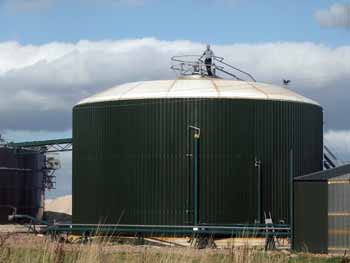
The reports author, Angela Bywater, questions whether the current drivers and incentives are too focused on encouraging farmers to create renewable energy and puts too little emphasis on encouraging the reduction of the carbon footprint of agriculture and the food supply chain. She adds, If AD is such a wonderful technology for treating organic substrates, why has it not been more widely accepted in the UK, particularly on farms?
The report highlights a number of key financial and regulatory barriers and calls on Government to take these into account when determining future AD strategy. The report recommends:
-The introduction of a more advantageous FIT band for small-scale digesters (e.g. <100kW) with incremental tariff bands to prevent installations artificially limiting their feedstocks to achieve the highest tariff
-Allowance within the Renewable Heat Incentive (RHI) to reflect the total gas volume produced by feedstocks which would otherwise be causing emissions, ensuring that the incentive level is sufficient to make it economic to use the gas directly, an option that can be more cost-effective for average-sized farms who wish to use AD as primarily a slurry management and pollution control system.
-Ensuring that farmers have improved access to funding, possibly through a loan system with preferential terms such as lower interest rates, access to Rural Development funding and working with banks to improve their AD understanding.
-Making sure that there is clear planning policy in favour of on-farm AD using local low-risk substrates, and
-Ensuring that regulators take a light touch on such systems. Increasing regulation, largely stemming from the waste industry, has made it difficult for farmers to access substrates, with one farmer putting it most succinctly, I can feed things to my cows that I cannot feed to my digester.
The full report is available from the RASE website (www.rase.org.uk).