




McDonald’s urges young people to consider a career in farming
McDonald’s urges young people to consider a career in farming as it begins search for talented students to join its farming fast track programme.
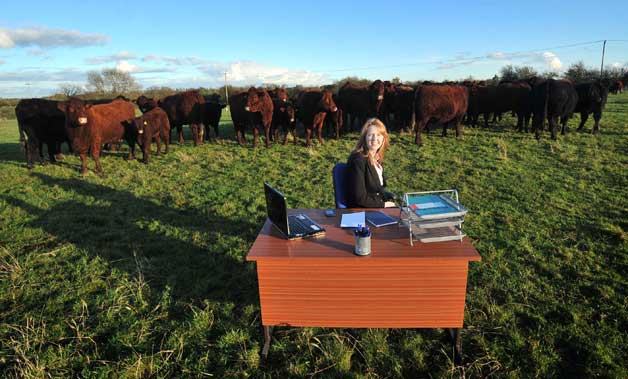
McDonald’s lifts the lid on modern farming as it urges young people to consider a career in agriculture
McDonald’s UK is today calling on young people to think seriously about a career in farming, as it invites entries for the 2013 intake of its Progressive Young Farmer Training Programme. The call comes as research commissioned by sector council Lantra shows that only 1 in 10 people working in the UK farming industry today are aged between 16 and 241. More than 50,000 new people will be required to join the sector over the next ten years in order to secure the future of the industry.
Starting in July 2013, the 12-month training programme is designed to help aspiring young farmers kick-start careers in the industry by providing them with the blend of farming and business skills needed to succeed in today’s modern farming sector. It offers agricultural students the opportunity to trace McDonald’s ingredients right through the supply chain, from farms and abattoirs, to the restaurant front counter.
During their placement, students will be mentored by some of the UK’s top farmers, as well as working at the head offices of leading food manufacturers and production companies who supply menu ingredients to McDonald’s, such as McCain, OSI Food Solutions and Tulip. The students will also work in a McDonald’s restaurant.
Warren Anderson, Director of UK Supply Chain, McDonald’s UK, commented: “McDonald’s is one of the biggest customers of British and Irish agriculture, but in order to keep buying these quality ingredients we need to play our part in ensuring the industry has enough young farmers coming through who have the right blend of skills. Our Progressive Young Farmer Training Programme will help talented agricultural students accelerate their careers, but more widely it’s important for young people who are studying broader subjects such as business studies, maths and science to think seriously about a career in agriculture.
“Our first intake of students who are now five months into their placements tell us they’ve learnt so much already. As the programme enters its second year, we will continue using our track record and expertise in jobs and training, as well as our scale and supplier relationships, to offer more students unparalleled access to the full spectrum of the agricultural supply chain.”
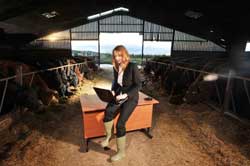
Modern farming requires additional skills not traditionally considered part of the job
Michael Smith, Director of Development and Evaluation, Lantra, commented: “Forecasts estimate that the agricultural industry will need more than 50,000 new starters over the next 10 years, and there’s no doubt that young people coming out of schools, colleges and universities across the country can play a massive role in plugging this urgent need for new talent. Farming is one of the most diverse and rewarding careers. It requires business and technical skills, a sense of entrepreneurship, and offers an alternative to the traditional 9 to 5 office environment. There are many routes into the industry, and we would urge all young people to think seriously about farming and land-based industries as a career option.”
For its 2013 intake, McDonald’s is looking for three students over the age of 18 who are passionate about a career in farming and currently studying towards an agricultural course at university or college. Interested undergraduates have just two weeks to submit an application online by Friday 23rd November 2012 and are advised to speak to their careers department for further information.
The Progressive Young Farmer Training Programme’s inaugural students are completing their experience from July 2012-July 2013. They are currently working on-farm with three progressive farmers in Dorset, Suffolk, and West Lothian, and will start placements at McDonald’s food production suppliers this November.
Christina Ford, one of McDonald’s inaugural Progressive Young Farmer students, commented: “The practical experience I’ve gained in the first few months of the training programme while working on a farm that supplies Tulip, the largest supplier of pork in the UK, has really opened my eyes to what a career in farming has to offer. I understand now just how many roles a farmer today has to play. In a typical day, I can easily go from feeding animals to gaining an insight into the farm’s overall business plan to improve quality and profitability.
“I’m really excited about the next stage, and seeing how the decisions made on-farm will impact the rest of the supply chain. There’s so much more to farming than I think many people realise and the skills I’m learning will set me up for the future.”
The Progressive Young Farmer Programme forms part of Farm Forward; McDonald’s long-term programme developed in response to major challenges facing British and Irish agriculture, such as the ageing workforce. Farm Forward aims to help secure a sustainable future for British and Irish farming and is built around five core commitments that span: quality of ingredients; animal welfare standards; creating work and training opportunities for young farmers; environmental and efficiency standards; and knowledge sharing.
About McDonald’s UK
McDonald’s has proudly run its business in the UK since 1974 and currently operates just over 1,200 restaurants across Britain and Ireland, serving more than 2.5 million customers every day.
About Farm Forward
As a major customer of produce from British and Irish farmers, McDonald’s buys quality ingredients from over 17,500 British and Irish farmers. Through Farm Forward, it will build on its existing support for British and Irish farming by launching a series of individual projects built around five core commitments:
- We’re passionate about serving great tasting food made with quality ingredients, so we’ll support and champion British and Irish farmers’ quality produce
- We’re committed to continually improving animal welfare within our supply chain and we buy from British and Irish farmers who continuously strive to raise welfare standards on their farms
- We want to keep buying British and Irish ingredients, and to do that we need more young farmers. Young people need more support in today’s competitive jobs market, and so we’ll create opportunities that help them get into farming
- Like the farmers who supply our ingredients, we care about looking after the countryside so we’ll help British and Irish farmers make environmentally-friendly improvements on their farms
- We’ll use the reach of our business to help share knowledge between farmers. Through this knowledge sharing, we’ll help farmers – who often have limited contact with the people who buy their produce at the till – keep their businesses in step with what consumers want
Food sourcing and supply chains
- McDonald’s strong and sustained sales growth in the UK means it now spends more than £320 million per year on its UK supply chain compared to £269 million in 2009
- 100% of McDonald’s beef is sourced from more than 16,000 British and Irish farmers.
- 100% of McDonald’s pork is sourced from Britain.
- Since 2007, McDonald’s has been using British Organic Milk in all of its coffees, Happy Meal milk bottles and porridge. 100% of the milk used in milkshakes, sundaes, McFlurrys and bottles is sourced from the UK
- McDonald’s only uses free range eggs in all its products. The eggs are accredited by assurance schemes such as the RSPCA’s Freedom Food standards; and in 2007 McDonald’s won a Compassion In World Farming ‘Good Egg Award’
- McDonald’s UK uses eggs produced to the ‘Lion Quality Mark’, the gold standard in egg production, or equivalent, symbolising a high standard of egg production
- McDonald’s won the RSPCA Good Business Award in 2008 and again in 2009 for long term commitment in improving animal welfare. Overall McDonald’s have won 4 RSPCA awards in six years
- McDonald’s French Fries, Hash Brown and Potato Rosti are made from potatoes grown within the EU – the vast majority are grown in the UK
- McDonald’s Flagship Farms programme is designed to promote and share the benefits of sustainable agricultural practices via real case studies from real farms in our supply chain. Developed in conjunction with the Food Animal Initiative (FAI) – an organisation set up in 2001 in recognition of the fact that commercially robust alternative systems can and do exist. The scheme showcases the innovative farming practices used at 15 progressive farms across Europe at www.flagshipfarms.eu The progressive farmers featured on this site are keen to share the benefits of the good practices they have adopted and continuously strive to improve and innovate
- McDonald’s Agricultural Assurance Programme (MAAP) was established in 2001 and drives continuous improvements throughout the McDonald’s supply chain. Each of McDonald’s’ Flagship Farms demonstrates a high level of compliance with MAAP, with impressive innovations in ethical, environmental or economic farming practices which in many cases exceed the criteria of MAAP
- McDonald’s serves Rainforest Alliance © certified coffee
Skills and education
- McDonald’s UK invests £42 million in training each year
- McDonald’s offers its 90,000 employees the opportunity to gain a wide range of nationally-recognised qualifications while they work, including a Level 2 Apprenticeship in Hospitality and Catering, a Level 3 Diploma in Shift Management and a Foundation Degree in Managing Business Operations
- McDonald’s is one of the UK’s largest apprenticeship providers, and was awarded a Grade 2 (good) Ofsted rating, with several areas Graded 1 (outstanding) for its Apprenticeship Programme, just 18 months after it was launched
- McDonald’s has awarded 35,000 nationally-recognised qualifications to its employees since it launched its learning and qualifications programme in September 2006
- McDonald’s was ranked in the ‘Sunday Times Best Companies to work for in the UK’ list for the first time in 2011. It was rated the 22nd best ‘big company’ to work for
- McDonald’s was recognised by The Great Place to Work Institute as one of the top 50 Best Workplaces in the UK in both 2007, 2008, 2009 and 2010 and was one of only five organisations with more than 10,000 employees to be included